
Selling Vinyl Records at a Garage Sale: Grading, Pricing, and Display
November 12, 2026
Introduction
Selling vinyl records at a garage sale is a rewarding way to declutter your home while connecting with local music enthusiasts. Unlike general household items, vinyl requires specific attention to condition, organization, and presentation to attract serious buyers. Whether you are a casual collector looking to clear space or a dedicated enthusiast parting with a portion of your library, the process demands a bit more preparation than selling old clothes or furniture. This guide walks you through the essential steps of grading your records, setting fair prices, and arranging your display to maximize interest and sales. Keep in mind that while the core principles of vinyl collecting are universal, local customs regarding payment methods, negotiation, and even the definition of a "garage sale" can vary significantly by country. Always be prepared to adapt your approach to fit the norms of your specific location.
Understanding Vinyl Grading Standards
The most critical aspect of selling vinyl is accurately describing its condition. Buyers rely on grading to determine value and playability. While there are no strict legal definitions for vinyl grading, the community generally follows a standardized scale. Familiarizing yourself with these terms prevents disputes and builds trust with potential buyers.
Media Condition (The Vinyl Itself)
- Mint (M): The record is perfect, with no visible marks or surface noise. It has likely never been played. This grade is rare for used items.
- Near Mint (NM): The record looks and plays almost like new. There may be very faint, non-impactful surface marks that do not affect playback.
- Very Good Plus (VG+): The record shows some signs of use, such as light surface marks or slight ring wear. It plays well with minimal noise, though occasional pops or clicks may occur between tracks.
- Very Good (VG): Noticeable wear, including deeper scratches or scuffs. The record plays but may have audible surface noise or minor skips. It is still playable and often sought after by budget-conscious collectors.
- Good (G) to Good Plus (G+): Significant wear. The record plays but may have loud surface noise, warping, or deep scratches. These are often sold as "fillers" or for their cover art.
- Poor (P) to Fair (F): The record is heavily damaged, warped, or broken. These are generally not worth selling unless they are extremely rare and the buyer is looking for a display piece.
Sleeve Condition (The Cover)
Do not neglect the outer sleeve and inner sleeve. Collectors value the artwork and liner notes as much as the music. Use similar terms (Mint, Near Mint, Good, etc.) to describe the cover. Note specific issues like ring wear (faint circles from the record pressing against the cover), seam splits, or water damage. If the inner sleeve is missing or replaced with a generic one, mention this, as original inner sleeves can add value.
Pricing Your Collection Fairly
Pricing vinyl can be tricky because values fluctuate based on rarity, artist popularity, and pressing details. Since you are selling at a garage sale, your goal is likely quick turnover rather than maximizing every dollar. However, underpricing rare items can lead to regret, while overpricing common items will result in unsold inventory.
Research Before the Sale
Spend time researching your records before the sale day. Use online marketplaces and collector databases to check sold listings for similar items. Look for the specific pressing year, label, and catalog number. A first pressing of a popular album is worth significantly more than a later reissue. If you are unsure about a specific record, err on the side of caution and price it slightly higher than you think it is worth, leaving room for negotiation.
Tiered Pricing Strategy
Instead of pricing every single record individually, which can be time-consuming, consider a tiered system. Group your records into categories such as "Common," "Uncommon," and "Rare." Assign a price range to each category. For example, you might price all common pop records at $1, uncommon jazz or rock records at $5, and rare or sought-after titles at $10 or more. Clearly mark these categories with signs so buyers understand the pricing structure. This speeds up the transaction process and helps buyers self-select items that fit their budget.
Local Market Considerations
Remember that pricing expectations vary by region. In some countries, haggling is expected and part of the social interaction; in others, fixed prices are the norm. If you are in a region where negotiation is common, price your items slightly higher to allow for discounts. If you are in a market where fixed prices are preferred, be clear about your terms. Additionally, consider the local cost of living. A price that seems fair in a major metropolitan area might be too high for a rural community, or vice versa. Adjust your tiers accordingly to ensure your items are accessible to your local audience.
Preparing Your Records for Sale
Preparation is key to a smooth sale. Buyers are more likely to purchase records that are clean, organized, and easy to browse. Taking the time to prepare your inventory shows respect for the medium and the buyer.
Cleaning and Inspection
Gently clean your records before the sale. Use a carbon fiber brush to remove dust from the surface. For more stubborn dirt, use a dedicated vinyl cleaning solution and a microfiber cloth. Avoid using household cleaners, which can damage the vinyl. Inspect each record for warping or deep scratches. If a record is severely warped, consider discarding it or pricing it very low as a "for parts" item. Check that all records are in their original sleeves if possible. If you have replaced inner sleeves, use anti-static polyethylene sleeves to protect the vinyl during handling.
Organizing by Genre and Artist
Do not dump all your records into a single pile. Organize them by genre first (e.g., Rock, Jazz, Classical, Pop) and then alphabetically by artist within each genre. This makes it easy for buyers to find what they are looking for. If you have a large collection, consider separating 45s (singles) from LPs (long plays) and 12-inch singles. Keep box sets together and clearly label them as complete sets. If a set is missing a disc, note this prominently on the cover or a tag.
Labeling and Tagging
Use removable stickers or small tags to indicate the price and condition of each record. Avoid using adhesive tape directly on the cover, as it can leave residue or tear the paper. If you are using a tiered pricing system, color-coded stickers can be an efficient way to indicate price categories. For example, green stickers for $1, yellow for $5, and red for $10. Include a small note on the tag if there are specific defects, such as "light ring wear" or "one scratch on side B." Transparency builds trust and reduces the need for buyers to inspect every record closely.
Displaying Your Vinyl Effectively
A well-organized display attracts more buyers and encourages them to spend more time browsing. Your goal is to make the records easy to see, handle, and purchase.
Use Proper Storage Boxes
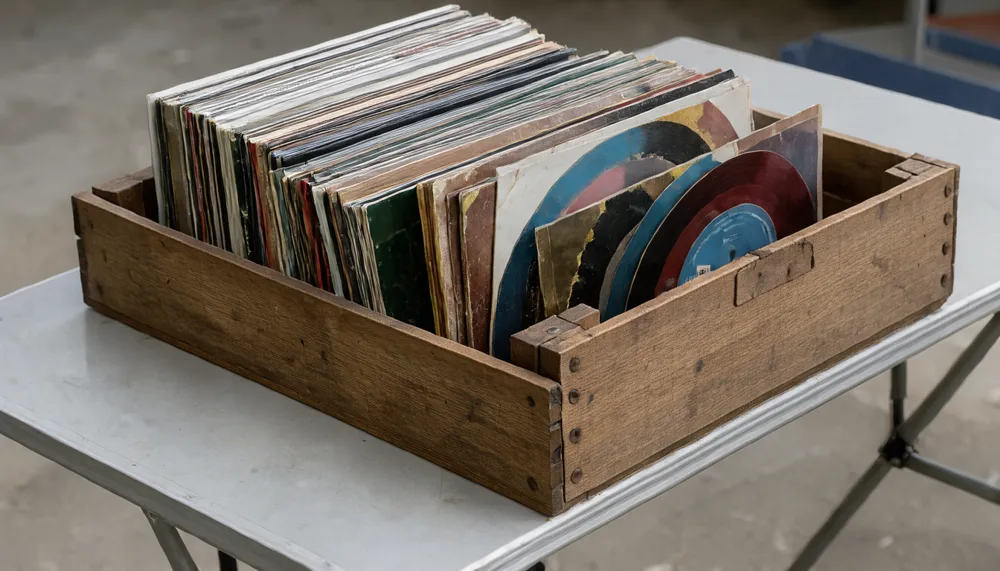
Invest in sturdy vinyl record boxes or milk crates. Avoid using cardboard boxes that can collapse under the weight of the records. Place the boxes on tables at a comfortable height for browsing. If you have many records, use multiple boxes to prevent them from becoming too heavy to lift. Ensure the boxes are stable and not overfilled, which can cause records to fall out or get damaged.
Create a Listening Station (If Possible)
If you have a turntable and speakers, setting up a listening station can significantly boost sales. Allow buyers to audition records before purchasing. This is particularly useful for selling higher-priced items or records in questionable condition. Ensure the turntable is set up on a stable surface and that the needle is in good condition. Have a few headphones available for private listening. If you do not have a turntable, consider partnering with a neighbor who does, or simply rely on clear grading descriptions.
Signage and Information
Place clear signs indicating the genre categories and pricing tiers. Include a sign with your grading key so buyers understand what "VG+" means in your context. If you accept specific payment methods (cash, digital transfer, etc.), state this clearly. In some countries, cash is king at garage sales, while in others, digital payments are increasingly common. Be prepared for both if possible. Also, consider adding a sign that says "Please handle records with care" to encourage buyers to be gentle with your inventory.
Navigating Local Customs and Logistics
While the mechanics of selling vinyl are similar worldwide, local customs can influence how you run your sale. Being aware of these differences ensures a smooth experience for you and your buyers.
Payment Methods
In many regions, cash is the preferred or only accepted method at garage sales. However, in countries with high digital payment adoption, buyers may expect to pay via mobile apps or bank transfers. Have a plan for making change if you accept cash. If you accept digital payments, ensure you have a stable internet connection or a backup plan. Some sellers prefer to keep transactions simple by accepting only cash, which can speed up the process and avoid technical issues.
Negotiation Norms
As mentioned earlier, negotiation expectations vary. In some cultures, haggling is a standard part of the buying process, and buyers may expect a discount simply for asking. In others, prices are considered fixed, and asking for a discount might be seen as rude. Observe the behavior of other sellers in your area or ask neighbors about local norms. If you are unsure, you can always state "firm price" on your signs to discourage negotiation, or "open to offers" to invite it.
Timing and Duration
Garage sale timing can also differ by country. In some places, sales are held on weekends only, while in others, they may span multiple days or even weekdays. Check local community boards or online platforms to see when sales are typically held in your area. If you are using a platform like Bazarmap to list your sale, you can see how other local sellers are timing their events and adjust your schedule to avoid conflicts or to capitalize on peak traffic times.
Conclusion
Selling vinyl records at a garage sale is a unique opportunity to share your musical history with your community. By taking the time to grade your records accurately, price them fairly, and display them attractively, you can ensure a successful and enjoyable sale. Remember to research local customs regarding payment and negotiation to align with buyer expectations. With careful preparation and a clear understanding of your inventory, you can turn your clutter into cash while helping fellow music lovers find their next favorite album. Happy selling!
 A Guide to Second-Hand Shopping in Norwich
 A Guide to Second-Hand Shopping in Los Angeles
 Rehoming Pets from Your Home: Safe Screening and Handover Tips
 A Guide to Second-Hand Shopping and Local Markets in Shanghai
 How to Spot and Buy a Good Vintage Bicycle at a Flea Market
 A Guide to Second-Hand Shopping in Manchester